
The European Commission: The EU's executive 'green' power
The European Commission (or simply 'the Commission') consists of 27 commissioners, one from each member state, who work to initiate and implement EU policies in various areas. In the EU, it is the commission that has the right to propose legislation, in the same way that governments have the right to propose legislation at national level. The majority of the Commission's legislative proposals aim to adjust or update existing EU legislation, or to ensure that international obligations are implemented. An important part of the Commission's work is therefore also to check that the member states comply with EU laws and regulations put forward by the EU.
The Commission is 'politically independent', and the commissioners work for the EU's interests, and must therefore not act based on the interests of their home country. The Commission represents the EU in international contexts and is responsible for negotiating new agreements with third countries and international organisations. In addition, it is the Commission that presents and implements the EU's annual budget.
The Member States themselves nominate a commissioner, after which it is the President of the Commission and the Council of Ministers who, on the basis of this nomination, appoint the new commissioners. The appointment of new commissioners is therefore often influenced by national and party political interests. After the commissioner's appointment, it is the Commission chairman who selects areas of expertise for the individual commissioners, in the same way as the head of government selects ministers for various areas of expertise at national level. The current President of the Commission (2019-2024) is German Ursula von der Leyden.
The Commission is organized in Directorates-General (DGs) which function as political departments. They are each led by a Director General and work with different policy areas. Some of the Directorates-General working on the climate and environment agenda are: DG CLIMA (climate), DG ENVI (environment), DG AGRI (agriculture), DG ENER (energy) and DG MOVE (mobility and transport).
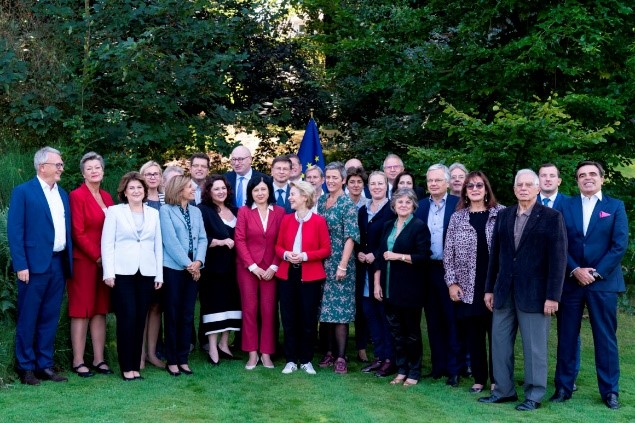
Since it is the Commission that has the right to put forward legislative proposals in the EU, they themselves can prepare new legislative proposals within the framework of the EU treaties, but they can also receive input and proposals for legislation from companies, organisations, etc. In addition, pan-European NGOs and interest groups also try to influence EU legislation. New measures and legislation are also developed based on specific political priorities that are set for the current Commission. Proposals for new legislation, like national legislation, are consulted in the Member States by authorities, NGOs, interest organisations, etc. The Commission adopts decisions as a single unit, which means that the entire Commission is responsible for what is adopted.
The current Commission has put forward six priorities for the period 2019-2024, each working with their own policy area. One of these priorities is 'A European Green Pact', which has ambitions for Europe to be the first climate-neutral continent and therefore works with issues within the climate and environmental agenda. A European Green Agreement has seven commissioners attached who work on various topics such as Transport, Energy, Agriculture etc.
Concretely in the area of the environment, the current Commission has a Commissioner for 'Environment, seas and fisheries' (Virginijus Sinkevičius from Lithuania), while climate and climate change fall under the Commission's vice-president, Frans Timmermans, who officially has the title of Commissioner for the EU's Green Pact.