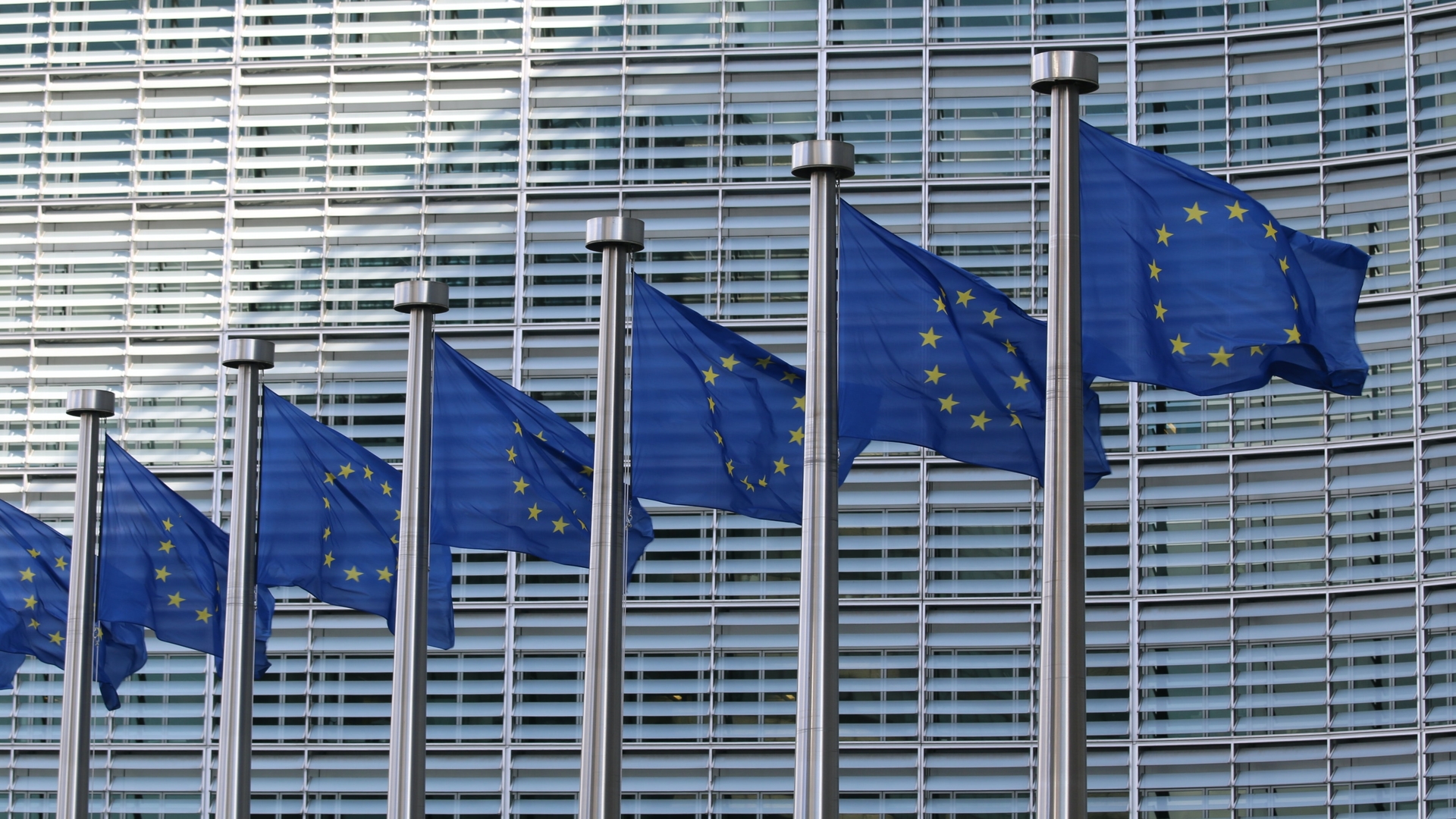
We need revision of REACH now!

The EU Commission's work program for 2024 has been published, and the otherwise long-awaited revision of REACH is not included. It is crucial for the health of all of us and our shared environment that we ensure up-to-date legislation that ensures products without harmful chemicals. Without a revision of REACH within the current EU Parliament's mandate, we are putting all that out of control.

Therefore, the Green Transition Denmark, the Consumer Council TÆNK and Plastic Change have together sent a letter to Minister of the Environment Magnus Heunicke and Minister of Food, Agriculture and Fisheries Jacob Jensen with the message that they must continue to push for the revision of REACH and other crucial green legislation in EU.
By |2023-12-14T13:16:58+01:0028 November 2023|letter|0 Comments

Letter to the climate minister from stakeholders about Denmark's National Energy and Climate Plan (NECP)

In the letter, we draw attention to the lack of stakeholder involvement in the Danish NECP. It is a requirement that stakeholders are involved early and effectively, and since the plan must be sent to the EU Commission next summer, we encourage the ministry to convene the relevant parties for a dialogue process as soon as possible. In the Green Transition Denmark, we are very interested in participating in this dialogue and in giving constructive input on how the NECP can be improved.

By |2024-01-23T16:24:09+01:006 November 2023|letter|0 Comments

The EU Commission should ensure legislation on sustainable food systems

We strongly encourage the current commission to come up with proposals before a new commission takes over after the elections in spring 2024.

The legislation, also called Framework for Sustainable Food Systems is part of the EU's Green Pact and is an essential part of enabling the transformation of the agricultural and food sector in the EU.

By |2024-01-23T16:36:16+01:0026. October 2023|letter|0 Comments

RGO to the EU: The deforestation regulation should contain 'other wooded land'

RGO are co-signatories on a briefing to the EU Commission and the member states, which proposes that the new deforestation regulation from the EU should contain the category "Other wooded land". This would lead to a significant expansion of the protected area, since almost a billion hectares of land is classified as 'other wooded land'.

If the category is not included in the regulation, there is a risk that deforestation and conversion of forests will be accelerated.

Read the full response to the consultation below.

By |2024-01-23T16:36:39+01:0026. September 2023|letter|0 Comments

Joint letter to the EU Commission: Deliver plan for nutrients as promised

Two: European Commission Executive Vice-President for the European Green Deal Maroš Šefčovič
Cc: Commissioner for the Environment Virginius Sinkevicius, Commissioner for Health & Food Safety Stella Kyriakides, Commissioner for Agriculture Janus Wojciechowski,
Minister for the Ecological Transition of Spain Teresa Ribera and Chair of the Committee on the Environment, Public Health and Food Safety Pascal Canfin


Re: Completing the European Green Deal: The Commission's initiative for an Integrated Nutrients Management Action Plan
Brussels, 13 September 2023

Dear Executive Vice President,
Following your recent appointment as the Executive Vice-President for the European Green Deal and your task to bring the European Green Deal forward, I am writing, on behalf of the undersigned, regarding the Commission's initiative for an Integrated Nutrient Management Action Plan (INMAP) , which should set the path for the EU to achieve its objective to cut nutrient losses in half by 2030. The INMAP was originally announced to be published in autumn 2022 but seems to face delays despite ample evidence that urgent action is needed to ensure that this key component of the European Green Deal is delivered swiftly.


The European Commission announced the INMAP in the Circular Economy Action Plan in March 2020, "with a view to ensuring more sustainable application of nutrients and stimulating the markets for recovered nutrients". In the Biodiversity Strategy and the Farm to Fork Strategy (F2F), presented in May 2020, and the Zero Pollution Action Plan published in May 2021, the Commission committed to reduce nutrient losses by at least 50% by 2030, while ensuring no deterioration in soil fertility. The INMAP is currently announced to be presented in second quarter 2023 but has not been published yet.


The need for urgent action is obvious, the European Environmental Agency has estimated losses of nitrogen and phosphorus in Europe to exceed safe and sustainable levels by a factor of 3.3 and 2 respectively.1 More than 30% of EU surface water, and more than 80 % of EU marine waters are eutrophic, while 14% of groundwater exceed legal nitrate thresholds for drinking water.2 The cost for water pollution due to nutrient pollution in the EU amounts to €22 billion annually.3 It is also clear that integrated nitrogen management is needed to achieve the Net Zero target.
Modeling by the Commission's own science and knowledge service, the Joint Research Center (JRC) has revealed that measures under existing legislation and policies, even if fully implemented, will only reduce the nutrient load to sea by 13% and 17% for N and P respectively.4 This is far from the 50% reduction target and clearly shows that policy measures beyond existing legislation are urgently needed in order to achieve the 2030 targets.


The Biodiversity, F2F strategies and Zero Pollution Action Plan all foresee a cut in fertilizer use "by at least 20%". However, science points to much greater reductions to be needed. The JRC, in its Knowledge for Integrated Nutrient Management Action Plan report, concludes that the EU should reduce its annual mineral fertilizer input of N and P by about 60% to reach sustainable nutrient flows.5
Such cuts can sound daunting, but empirical evidence points to the fact that fertilizer use can often be cut significantly without affecting yields6 and modeling studies have found that phasing out synthetic fertilizers use in the EU is realistic as part of a transition to agroecological farming, accompanied by a cut in food waste and a shift to sustainable diets.7 Nutrient recovery from organic waste streams can contribute significantly to replacing synthetic fertilizers and the INMAP should address EU end-of-life criteria and markets for secondary raw materials. Such a transition of the food production system would also bring massive co-benefits by reducing the EU's dependency on imports of fertilizer and feed in order to achieve strategic autonomy, slashing pollution by other agro-chemicals (pesticides and anti-microbials), and cutting water use by the sector.
To achieve this, bold action and clear directions are needed. We therefore urge the Commission to keep to its promise to deliver the INMAP and to listen to scientific expertise for setting the path until 2030 and beyond.
Several of our organizations contributed to the 2022 public consultation on the INMAP, where we presented thorough evidence of the issues at hand and comprehensive recommendations for how the EU could achieve genuine strategic autonomy in nutrients management and ultimately food production.

In light of a summer that yet again was marked by extreme weather events made more intense by climate change, we once again reach out to you to ask you to deliver actions that safeguard our food, water and climate security in the long term.

Yours sincerely,
Patrick ten Brink
EEB Secretary General

CSO/NGO signatories
Agroecology Europe
AirClim
Corporate Europe Observatory
Eurogroup for Animals
European Anglers Alliance
Four Paws
Green Transition Denmark
IATP
ifoam extension
Wetlands International Europe

Academic signatures
Prof. Dr. Martin J Wassen & Dr. Jerry van Dijk, Utrecht University
Dr Kevin Hicks, Stockholm Environment Institute at York, University of York, UK

Footnotes:
1 EEA Report No 1/2020: Is Europe living within the limits of our planet — European Environment Agency
2 European Commission, (2021), Report on the implementation of the Nitrates Directive for the period 2016-2019
3 European Commission, (2021), Green taxation and other economic Instruments: Internalising environmental costs to make the polluter pay
4 Joint Research Centre, (2023), Knowledge for Integrated Nutrient Management Action Plan (INMAP) (JRC 2023)
5 JRC 2023
6 Anthropocene magazine, (2019), Here's how precision agriculture could help farmers reduce fertilizer use
7 See for example: IDDRI (2018) An agro-ecological Europe by 2050: multifunctional agriculture for healthy eating and Billen et al. (2021) One Earth perspective Vol 4:6, pp 839-850 https://doi.org/10.1016/j.oneear.2021.05.008

By |2024-01-23T16:37:03+01:0012. September 2023|letter|0 Comments

Denmark can and should reduce the climate burden by 80 percent by 2030

Dear Mette Frederiksen, Jakob Ellemann-Jensen, Lars Løkke Rasmussen, Pia Olsen Dyhr, Inger Støjberg, Alex Vanoplasgh, Søren Pape Poulsen, Mai Villadsen, Martin Lidegaard, Pernille Vermund, Franciska Rosenkilde, Morten Messerschmidt

After the climate election in 2019, several of you helped make history when you adopted a high and binding climate target to reduce Denmark's emissions of greenhouse gases by 70 percent by 2030. You chose to listen to science and do what has always been intended with climate policy: to do what is necessary.

But the world today is not the same as in 2019. The climate has changed faster than science could predict, and even if all the countries of the world live up to their current climate targets, we are heading for a temperature increase of between 2,4-2,8 degrees. The climate is urgently admitted, and we have to state that the planned treatment is not working.

At the same time, you in the Folketing together with Danish companies and citizens have proven that we in Denmark can act on the climate crisis. Often to the benefit of the economy and employment. In 2020, the Danish wind turbine industry had a turnover of almost DKK 130 billion. DKK and employed more than 32.000 full-time employees.

In addition, a fundamentally changed geopolitical situation means that Denmark must be freed from its dependence on fossil energy sources as soon as possible.

Therefore, Denmark's future government should align itself with science and increase the target for reducing greenhouse gases in 2030 from 70 to 80 percent. It is necessary if we are to lift Denmark's share of the Paris Agreement, and it should happen in parallel with rapid climate action, so that the climate target for 2025 is met. In order to avoid that our climate burden is simply outsourced abroad, an ambitious reduction target should be set for Denmark's climate burden outside the country's borders at the same time.

It is necessary and we know it is possible. As one of the world's most prosperous countries, we should stretch as far as we can and show the way to a greener future.

Yours sincerely,

Bjarke Møller

Director, Green Transition Denmark

By |2023-11-23T11:54:57+01:0014 November 2022|letter|0 Comments

Joint appeal to EU parliamentarians: Regulate WLC in the Building Directive (EPBD)

This means similar legislation to that introduced in Denmark from the turn of the year, where climate impact from all phases of the building's life cycle is taken into account and regulated at EU level.

The background for the letter is that the EPBD is currently under review. The commission has played with a proposal to start calculating the WLC, and the council has not proposed any changes to this. Since the revision must be implemented over the next few years, and is expected to only come into force in the Member States around 2027, we believe that it is crucial that one goes a step further. In addition, the revision-after-this-revision will come into force at the beginning of the 2030s at the earliest. It is a very long time to wait for regulation and incentive structures for the European construction industry in relation to the climate goals. We therefore believe that it is in the interest of the climate and construction to ensure joint regulation during this period.

By |2024-01-23T16:39:42+01:003 November 2022|letter|0 Comments

Letter to the EU Commission: fossil fuel must get out of heating

Green Transition Denmark, together with 26 other organisations, has written a letter to the EU Commission that fossil fuels must be phased out as soon as possible: This can be done via a regulation of Ecodesign. The Commission has proposed that from 2029, no new fossil fuels should enter the market, but there are already several countries that are far more ambitious. We also hope that Denmark will soon come to the fore with a ban on the new installation of fossil fuels.

By |2023-11-23T12:56:56+01:003 November 2022|letter|0 Comments

Letter to the Minister of Energy ahead of the crucial EU negotiations on energy efficiency and renewable energy


Dear Climate, Energy and Supply Minister Dan Jørgensen

A winter of energy uncertainty is approaching, and there is now an urgent need for short-term solutions that address the current energy crisis and skyrocketing energy costs, which have major implications for households, communities and businesses across the country. Our excessive reliance on fossil fuels has been a major cause of this.

Commission President Ursula von der Leyen, in her State of the Union speech, pointed out that dependence on Russian fossil fuels comes at a high cost and that we need to get rid of this dependence across Europe. As governments across Europe try to help households get through this winter, they must also look ahead and start embracing and implementing long-term solutions that protect us beyond the coming season, but also address both the energy and climate crises. It will be necessary that we accelerate the transition to a sustainable, fully renewable
energy system combined with energy savings.

Fortunately, these solutions already exist. Energy savings in our homes and in various sectors, combined with accelerating the deployment of renewable energy across Europe, are the key components needed for a rapid energy transition. Therefore, there is an urgent need for higher ambitions in both the Energy Efficiency Directive (EED) and the Renewable Energy Directive (RED) to send clear signals about the need for more investment in a sustainable energy transition compatible with the Paris Agreement. But as it stands now, both the EU's energy efficiency targets and the EU's renewable energy targets, as agreed by the Energy Council in June 2022, do not go far enough in terms of protecting Europe's security of energy supply and meeting its climate commitments under the Paris Agreement.

You have advocated more ambitious targets in the past and we hope that you will continue to push for increased energy targets when Member States discuss the revisions of the EED and RED. The European Commission proposed increasing both the EU's binding targets for energy efficiency and renewable energy for 2030 as part of the REPowerEU package. And while this is a step forward, the proposed targets will not bring us into line with the Paris Agreement, which
means that we must achieve energy savings of at least 20% and a share of renewable energy of at least 50% by 2030 at the latest. More energy savings and a rapid and ambitious rollout of renewable energy are crucial for both energy security and to limit global warming by 1,5 .XNUMX °C. It is now clear that failure to act would be significantly more expensive.

The further negotiations on the revision of EED and RED should really pave the way for more ambitious energy targets. You have the opportunity, in the ongoing negotiations on the REPowerEU proposal, to revise RED, to help those struggling with high energy prices throughout the country, and to stand firm in your commitment to the Paris Agreement. For EED, it will be crucial to raise the level of ambition for the energy efficiency target in response to the climate crisis and strengthen energy security during the upcoming trilogue negotiations.


Sincerely,
Green Transition Denmark

By |2023-11-23T13:07:51+01:004. October 2022|letter, News|0 Comments

Joint NGO letter to the President of the European Commission, Ursula Von der Leyen

Together with 18 other European NGOs, RGO has sent a letter to the President of the European Commission, Ursula Von der Leyen, in which we urge her to stand up to the pressure to postpone the EU's chemical policy reform - the revision of REACH and CLP, which is crucial for to achieve a society without harmful chemicals.

By |2024-01-23T16:39:53+01:0029. September 2022|letter|0 Comments
Go to Top