It is too early to plan infrastructure for the transport of piped CO2

It is far too early to start planning a national infrastructure for piped transport of CO2 in Denmark. The plans to establish an integrated value chain for CO2 capture, transport and storage rest on the notion that it will be one among several important climate solutions. But there is reason to stop and take a more thorough pause for thought before committing significant financial and administrative resources to developing this carbon value chain.

Therefore, the Council for the Green Transition has written a consultation response in which we recommend that the bill be put on hold until 2030, so that there is time to make a thorough evaluation of the experiences from Ørsted's CCS plant and to assess whether the international experiences with CCS and establishing a larger infrastructure is an economically sustainable and cost-effective path compared to investments in and scaling up other green technologies.

Green Transition Denmark is generally skeptical of the idea of ​​already opening up the establishment of a national infrastructure for CO2 transport via pipes. This can lead to a carbon lock-in, which i.a. can make it extra attractive for cogeneration plants, waste incineration plants, cement factories and other industrial companies to invest in CO2 capture plants, even where there are more climate-efficient green technologies that could have a much greater climate effect and contribute to a faster reduction of air pollution.

By |2024-01-26T13:57:30+01:0018 January 2024|Hearing response|0 Comments

Pipeline transport of CO2

Consultation response to the Act on Pipeline Transport of CO2

Green Transition Denmark would like to thank you for the opportunity to comment on the bill.

We generally believe that it is far too early to start planning a national infrastructure for piped transport of CO2 in Denmark and to tie up financial and administrative resources in transporting large quantities of CO2 through pipes across the country. Green Transition Denmark has a number of reasons for recommending that the bill not be accepted.

It is stated in the comments to the bill that there is already a developed CCS market in Denmark, but it is far too premature to conclude this. There are a number of demonstration and pilot projects, business initiatives, but there is no real market or integrated value chain for CO2 capture, transport and storage. It may take many years before this has a realistic chance of becoming a reality.

It is claimed that the bill does not have direct climate or environmental consequences, but the installation of a large infrastructure with piping of CO2 will have a negative climate effect during construction, it will seize significant natural areas, and a negative effect on climate and environment during construction. There is an additional energy and material consumption associated with the installation of a new CO2 infrastructure, which should be taken into account in the assessment. Or as Rambøll has concluded in a memo for the Danish Energy Agency: The plan for the tender with geological storage of greenhouse gas emissions will "in itself involve energy consumption and CO2 emissions. Materials, construction work, transport and pumps in operation and later decommissioning of the facilities will directly and indirectly lead to the release of greenhouse gas emissions.”

It is also to be expected that the bill may place greater demands on the administration's time and resources. This is also recognized in the comments to the bill, where it is stated that the Ministry of Climate, Energy and Supply's costs will be increased by the proposed regulatory framework for Danish CO2 infrastructure. Carrying out accompanying supervision of the expanded CO2 infrastructure will also lead to increased costs, as the supervisory competence is proposed to be assigned to the Danish Energy Agency. These extra legal costs should ideally be paid by the operators and consortia that want to establish a CO2 infrastructure, so that they have to cover the full costs of the establishment, and therefore get extra incentives to make cost-effective solutions. But there is an additional risk in this process: that the authorities' limited administrative resources will be used to a greater extent to process new projects about CO2 infrastructure, where the administrative resources could be used much more effectively to ensure faster case processing for the construction of solar installations, wind turbines, industrial heat pumps and a necessary expansion of Denmark's dilapidated electricity grid. It is far more important to accelerate the transition to a renewable energy system and to electrify as much of society as possible so that the electrons can be transported faster than to use the limited resources to promote a future molecular transport that may not be cost-effective or profitable at all market conditions, let alone helpful in relation to reaching Denmark's climate goals.

In the bill, it is proposed that expropriations can be made to promote the laying of pipelines over land, and this can also seize significant administrative and financial resources that could be better used for other and more climate-efficient purposes. It must e.g. it is expected that there may also be local protests against more CO2 infrastructure, transport and storage, as has already been seen in Havnsø municipality, where local citizens feel insecure that there may be leakage from underground CO2 storages.

We note that the bill guarantees that EIA studies will be carried out in relation to establishment of pipelines, and that is good. But stricter safety measures should also be ensured during operation and when transporting CO2 by pipe over land. Piping in urban areas should be avoided as far as possible. There have been a few cases of leaks from CO2 pipelines abroad, and in high concentrations CO2 is dangerous for citizens and the environment in the local area, and it can lead to extra emissions of CO2 into the atmosphere. Therefore, it is important that the necessary resources are also set aside to supervise operators of the pipelines, and that the operators are given the duty to immediately warn local citizens and authorities in the event of leaks on pipelines.

In the bill § 29, subsection 1, 1st point it is proposed that, in decisions pursuant to § 28, representatives in the Energy Complaints Board, appointed on the recommendation of the Danish Industry and the Council of Agriculture, be replaced by 1 member with special expertise in the establishment and operation of gas-transporting pipelines and 1 member with special expertise in the environment.

Green Transition Denmark agrees that it is a good idea. It is important that the correct expertise is taken into consideration when handling appeals against decisions regarding pipeline installations for the transport of CO2.

General comments on the bill:

Green Transition Denmark is generally skeptical of the idea of ​​already opening up the establishment of a national infrastructure for CO2 transport via pipes. This can lead to a carbon lock-in, which i.a. can make it extra attractive for cogeneration plants, waste incineration plants, cement factories and other industrial companies to invest in CO2 capture plants, even where there are more climate-efficient green technologies that could have a much greater climate effect and contribute to a faster reduction of air pollution.

The previous international experiences with CO2 capture do not give reason to believe that the large scale-up will take place in the next 10 years, which could make it economically attractive or climate-wise meaningful to capture CO2 at point sources and then transport the CO2 over long distances and store it underground.

There are many different technological forms of CO2 capture under development around the world, but CO2 capture in biomass plants, waste incineration plants, cement plants and the energy-intensive industry is still very immature and has been difficult to scale up in a cost-effective way. The international CCS experience has so far been rather disappointing in relation to CO2 capture in industry and at power plants.

We are aware that the International Energy Agency and other players such as The Global CCS Institute is still in favor of CO2 capture, but we note at the same time that the head of the IEA, Fatih Birol, has started to tone down the expectations for how much CCS will come in the coming years. At the launch of the World Energy Outlook in October, he thus said that "CCS has been the story of a great disappointment."

Green Transition Denmark recommends that the state postpones the planned tenders for CO2 capture, transport and storage in 2024 and 2025. It is our assessment that it would be much better to take a break to think. See also our detailed note on the same subject.

The state runs a great risk for taxpayers' money if large public funds are tied up in developing an integrated value chain with state-supported CO2 capture facilities, pipeline transport and storage. And at the same time, you run the risk of tying up considerable administrative resources in realizing this project, which could have been used on other green technologies with a far greater and faster climate effect.

We note that the present bill on pipeline transport of CO2 does not provide direct access to state aid for the pipeline, as it is envisaged that this will be left to the operators, who themselves must obtain financing for the construction of the infrastructure. If a CO2 infrastructure is created, the full bill should be covered by the polluters, so that they have incentives to also reduce their pollution or to consider cost-effective alternatives to create CO2 capture, transport and storage. Any form of government support for CO2 capture, transport and storage should be avoided. It would be far better to introduce a higher CO2 tax that could give market players stronger incentives to promote effective and cost-conscious climate solutions.

The current bill should be seen in the context of the broad political settlement that was concluded on 20 September 2023, where the parties to the agreement agreed to hold two tender rounds in 2024 and 2025 for CO2 capture, transport and storage. These tenders can lead to the state anyway ending up giving direct or indirect support to consortia who want the state to cover some of the risk/bill by establishing pipelines to transport CO2. This should be avoided.

If private companies or consortia want to establish pipelines between CO2 capture facilities and e.g. CCUS plant, the Green Transition Denmark believes that it is important that the state does not provide money for this, either directly or indirectly. The total costs for construction, operation, maintenance and extra safety measures should be borne solely by the market and users. It should not be the state, because it should, in accordance with the Climate Act, choose the most cost-effective measures to ensure a reduction of Denmark's emission of greenhouse gases by 70 per cent. towards 2030. CO2 capture, transport and storage is one of the most expensive measures that can be chosen, and it is not cost-effective compared to the other green technological solutions available.

Furthermore, it can be stated that there is still some uncertainty as to whether CO2 capture at point sources will be effective. It is far from certain that you will be able to catch 3,2 million. tonnes in 2030, which a wide circle of the parties in the Danish Parliament have set as a target. There are real technical challenges that should not be ignored. The Danish Energy Agency calculates in their technology catalog that the capture efficiency is between 85-99 per cent. (on large biomass plants) or 90-99 per cent. at other facilities. In reality, international experience so far shows that the effectiveness is much lower. Only under completely optimal conditions and for very short periods can CO2 capture systems at point sources manage to remove between 75-90 per cent. of the CO2. But their downtime is far higher than what the Danish Energy Agency expects in their technology catalogue, and the real efficiency in capture plants around the world is in reality between 20-80 per cent. per year. You have to factor in operational disruptions and significant downtime when the capture plant is out of operation. Let us assume that in the course of a few years it succeeds in eliminating some of the childhood diseases, but this will hardly bring the average efficiency above 65-75 per cent.

In theory, transporting CO2 via pipes is cheaper than transporting it with trucks and ships, but the pipeline can only rest on its own if there is a larger scale in the overall CO2 capture in Denmark. And it's still a big if. No one yet knows whether Ørsted's state-supported capture facilities at the plants in Avedøre and Asnæs can capture the promised amount of CO2, no one knows whether Aalborg Portland's pilot project can ever be scaled up, and even if there are district heating plants and waste incinerators that hope to one day be able to capture CO2 for end of the chimney, it is highly uncertain whether there will be a market economic basis for betting on it in the long term. If the scaling does not take place, there is a risk that a great deal of time, energy and financial resources will be wasted on building a new CO2 infrastructure that will not be profitable under market conditions, and a lot of time and money will also be wasted in management along the way and case processing, which could be much better used to promote faster case processing and installation of renewable energy projects, heat pumps and energy-efficient technologies.

The plans to establish an integrated value chain for CO2 capture, transport and storage rest on the notion that it will be one among several important climate solutions. But there is reason to stop and take a more thorough pause for thought before committing significant financial and administrative resources to developing this carbon value chain. It can also be deeply problematic in relation to the climate to scale up too much and too quickly with CCS and the associated infrastructure.

It is particularly problematic if a future pipeline makes it cheaper for wood-fired CHP plants and district heating plants to invest in CO2 capture. This is absolutely not recommended, as it takes up to 30 years before CO2 capture on a combined heat and power plant with Danish wood can become net positive. See RGO's note on this for the specific calculation.

CO2 capture plants have a very large energy consumption, and in energy systems like the Danish one (where fossil fuels still make up 53 per cent of the gross energy consumption) the extra energy consumption will lead to increased CO2 emissions. The international climate panel, IPCC, estimates based on the research literature that CO2 capture plants cost 13-44 per cent. extra on the energy bill of the plants that install it. However, CO2 capture at biomass power plants consumes even more energy because it requires 25-55 per cent. extra energy than if the power plant did not capture CO2.

If this extra energy consumption is covered by fossil fuels or extra biomass combustion, more CO2 and methane gas are emitted in connection with the extraction, transport and use of these fuels. When you factor in these extra emissions, and add the energy costs associated with transporting, disposing and storing the captured CO2, the real efficiency of CO2 capture in some cases drops to between 0 and 25 percent. The extra bill can add up to several hundred kroner per tonnes of CO2. It is an energy bill that will ultimately end up with the citizens, and since the bill for electricity and heating relatively takes up the most in the household for the lowest incomes, it can also have a social impact.

Green Transition Denmark will not deny that CO2 capture may play a role in climate policy during the 2030-40s, but the state must not promote such a technology that has little prospects for solving climate problems in the short term and medium term.

At the same time, we call for a more thorough calculation of the broader climate and environmental costs associated with establishing an overall CO2 value chain from CO2 capture at industrial point sources, transport via pipes to CO2 storage on land and to of the sea These calculations should include financial opportunity costs in the form of alternative investment opportunities in competing climate solutions, such as additional installation of solar cell systems, wind turbines, heat pumps, electrification of heat supply, industry and transport, as well as energy-saving technologies that can provide a much greater, faster and safer climate effect per krone invested.

Green Transition Denmark believes that it is important to avoid an excessively large carbon lock-in for expensive infrastructure, which will trigger extra large climate bills. The large investment in the CO2 capture facilities and a rapid establishment of a new CO2 infrastructure can, in the worst case, lead to the preservation of fossil-based production and infrastructure and/or lead to the construction of new infrastructure to dispose of the captured CO2, which must be transported by trucks , ships and pipes to be stored underground or to be used in various CCUS subsidiary industries. The long pipelines and the permanent need for transport during disposal will impose additional costs on society, it will seize additional natural areas, and in the construction phase it may increase Denmark's energy and resource consumption instead of reducing it.

If the politicians still choose – despite all the objections mentioned above – to focus on the capture, transport and storage of CO2 on a larger scale, it is better if it happens locally in coastal areas, where the CO2 can be transported by ship and the captured CO2 can possibly be form part of a circuit where it is used for production at new Power-to-X factories, where e.g. e-kerosene for aviation. If appropriate, one must think business-politically about the development of special CO2 clusters, which, for example, trying in Fredericia. But a larger fixed CO2 infrastructure with pipelines throughout the country can end up being counterproductive, leading to extra CO2 emissions in the construction phase and leading to excessive investments in CO2 capture facilities in industry, power plants and incineration plants that should otherwise be invested in a green and energy-efficient conversion of all processes.

Therefore, the Green Transition Denmark recommends that the current bill be put on hold until 2030, so that there is time to make a thorough evaluation of the experiences from Ørsted's CCS plant and to assess whether the international experiences with CCS and the establishment of a larger infrastructure is an economically sustainable and cost-effective path compared to investing in and scaling up other green technologies.

By |2024-01-15T15:45:23+01:0020. December 2023|Hearing response|Comments closed for Pipeline transport of CO2

PFAS restriction proposal

Green Transition Denmark (Green Transition Denmark) warmly welcomes and supports the proposal to restrict all PFAS as a group.

PFAS is a group of chemicals that are well documented to harm both the environment (water, soil, air and ecosystems) and human health. Furthermore, these chemicals are a huge economic burden for society, by far exceeding profits for the industry[1]. Thus, this restriction proposal is necessary to mitigate the ongoing crisis caused by PFAS.

Only to a small extent is it possible to clean up this pollution. Furthermore, PFAS are cleaned very poorly in Danish treatment plants; some of the substances even become more concentrated in the process, so that the level is higher in the outlet than in the inlet water[2]. The only solution is to stop the production, use and discharge.

circulareconomy

In a circular economy, products and materials are kept in circulation, today mainly through recycling. Recycling involves various treatments eg, mechanic treatment, heat, solvents to separate parts and to reform them into new materials and products. In these processes, PFAS can be emitted[3],[4] adding to the increasing burden of PFAS. Moreover, since PFAS is difficult to remove, the recycled material will be contaminated by PFAS, making it less desired on the market. With the large amount of waste containing PFAS today (eg, consumer products, building materials, sludge, electronics) these waste streams should be treated as hazardous waste. But then there will not be much left to recycle. Therefore, this PFAS restriction is a cornerstone and a decisive starting point to make a clean circular economy possible in the future.

The Danish Consumer Council has been testing for PFAS in consumer goods for years[5] and these tests confirm that these substances are used in a wide variety of products that consumers are in daily contact with. On the other hand, the tests also show that there are many similar consumer goods that do not contain PFAS, confirming that alternatives are available and/or PFAS can be omitted in these productions.

Derogations in the dossier

Green Transition Denmark acknowledges that some derogations from the PFAS restriction are necessary where the PFAS substance is crucial for the product or process and no alternatives for the same function exist AND that the product/process is essential for society. It is nevertheless of utmost importance that a derogation is allowed only when no alternatives fulfill the same function, and that the performance is left outside the derogation criteria. Performance may not be 100% of what PFAS can offer, since the desired qualities of PFAS are also what make them extremely problematic in the environment, but if the function is reached the alternative should be deemed a good alternative. A very clear definition of 'essential for society' must be made.

A derogation should only be given under certain criteria:

  1. Only for a limited time period and with requirements to develop/support the development of alternatives.
  2. Requirements for preparing full LCA's for the PFAS use.
  3. Full disclosure of use (substances and amounts) and emissions.
  4. Products containing PFAS should be labelled, to enable consumers to make an informed choice and ensure proper waste management.
  5. Use case specific requirements for zero emission to the environment and zero exposure to workers, since the extreme persistence will allow even low levels of emissions to build up in the environment/human body.
  6. Extended product responsibility, to ensure that the waste is treated responsibly, without any emissions.

Transitional period

We acknowledge the great work already done in making the proposal, and that it will take some time to adjust to the new legislation, however, the progress envisioned in the proposal is way too slow.

Not until 2025 a legislative proposal is foreseen to be presented to the member states, and then it may take some time (depending on the extent of the changes after consultation and trialogue negotiations in the Council, Parliament, and Commission) before the PFAS restriction is published in the Official Journal.

On top of that, there are transition phases, which are proposed to be between 18 months and 13½ years. The most optimistic scenario is that the substances will be phased out in 5-6 years. Realistically, it will likely take 7-10 years, and there is a risk and concern that there will be more derogations introduced after the consultation. This will have significant effects on the environment and societal costs will follow. This is not in line with the aim of the proposal to protect the environment and safety for human health.

The restriction proposal presents two scenarios:

1) RO1: a ban with exceptions for 18 months for everything, etc

2) RO2: a ban with exceptions for 18 months, 6½ years, or 13½ years.

Green Transition Denmark supports scenario 1 or at least exceptions that have shorter time limits than in scenario 2.


[1] https://chemsec.org/reports/the-top-12-pfas-producers-in-the-world-and-the-staggering-societal-costs-of-pfas-pollution/

[2] https://pro.ing.dk/watertech/artikel/pfas-niveauer-stiger-igennem-renseanlaeg-graensevaerdi-overskredet-med-mere-end

[3] End-of-life circulation of PFAS in metal recycling streams: A sustainability-focused review; Bulson et al., Resources, Conservation and Recycling; July 2023

[4] Lithium-ion battery recycling: a source of per- and polyfluoroalkyl substances (PFAS) to the environment?; Rensmo et al., Environmental Science: Processes and Impacts; April 2023

[5] Eg, Cosmetic products – 91 products identified containing PFAS (2022) (https://taenk.dk/kemi/english/avoid-cosmetics-and-personal-care-pfas) and Carpets (2023): 4 of 15 products contained PFAS (https://taenk.dk/kemi/english/avoid-pfas-carpets)

By |2024-01-15T12:15:44+01:0026. September 2023|Hearing response|0 Comments

Consultation response: EU strategy for CO2 capture and storage technologies

Green Transition Denmark insists that emission reductions should have the highest priority in the EU's climate policy, but acknowledges that the technologies may be necessary for CO2 reduction in certain areas. But it will require tougher EU requirements and the right incentives in order not to compromise with the green transition.

Therefore, we recommend:

Focus on emission reductions

RGO believes that one should prioritize here-and-now reductions and a further focus on reducing the 'hard-to-abate' emissions, as this will reduce the future need for CO2 capture and storage. Otherwise, you risk building oversized CCS infrastructure, which can create a technological lock-in in products and production processes with high emissions of greenhouse gases.

RGO believes that the use of CO2 capture and storage should only be considered in the sectors that have the most difficulty in reducing their emissions, such as the steel and cement industries, as well as for reducing the CO2 concentration in the atmosphere.

Tightened and expanded legislation

RGO believes that the focus should be on overall regulatory frameworks that best ensure a cost-effective and climate-friendly combination of emission reductions, CO2 capture and negative emissions. Here, it is absolutely crucial to expand the EU's emissions trading system (ETS) to also include the agricultural sector and the remaining emissions outside the existing system. In addition, a robust certification scheme for negative emissions based on BECCS and DACCS must be established.

RGO believes that the quotas for natural carbon storage should be strictly regulated and in limited quantities, as it is difficult and expensive to monitor and at the same time that it can be problematic to ensure additionality. In addition, natural carbon storage is not permanent, so negative emissions should not apply to temporary and reversible storage in e.g. forests and on agricultural land. Natural carbon storage should only act as a supplement to other reduction strategies.

Economic responsibility

RGO believes that the costs of the CO2 capture technologies should be placed entirely with the private industrial energy sector and storage operators. Public government support should be minimized, as it may otherwise delay or prevent the research, development and deployment of renewable technologies.

Find our full consultation response (in English) below.

By |2024-01-23T16:36:48+01:0025. September 2023|Hearing response|0 Comments

The energy in data centers must be utilized as best as possible

Data centers are associated with a large energy consumption, which continues to increase. But with concrete, targeted measures, Denmark can take the lead by implementing energy efficiency and utilization of excess heat.

At the moment, a legislative proposal is under consultation that precisely addresses this topic ('Act on the promotion of efficient energy use and greenhouse gas reduction). According to the current text, it will be mandatory for data centers over 500 kW to report their energy consumption. Green Transition Denmark supports this. But we also see it as important to ensure energy efficiency and the green transition along the way.

Therefore, we recommend:

  1. Use the waste heat – use the green energy
    • Danish data centers produce enormous amounts of surplus heat, which can be used in district heating, which reduces the need for biomass for heating. The current utilization of the surplus heat from the tech giants Google, Microsoft, Meta and Apple is extremely limited. It should therefore be required that the data centers' waste heat be used effectively in line with the increasing demand for internet services and intelligent technology from citizens and businesses, whose increasing needs are expected to drive increased electricity consumption from data centers towards 2030. Denmark has a unique opportunity to lead the way for other EU countries in the area of ​​energy efficiency and utilize an already existing resource.
  2. Place data centers strategically – prepared for future consumption
    • By requiring the location of new data centers close to the district heating network, the possible efficiency of heat recovery can be maximized. The trend shows that the data centers of the future are more likely to be located near their end users, which means that requirements should be placed on their physical location to avoid future waste of heat. In this way, Denmark can be at the forefront of future consumption, and at the same time ensure that the excess heat from the data centers benefits Danes and Danish companies.
  3. Update the settlement rules – remove potential barriers
    • In connection with reporting energy consumption and additional requirements, it will be appropriate to examine whether the rules for the utilization of excess heat are up to date. This should be investigated to ensure that it is economically advantageous for the district heating companies and the data centers to utilize the excess heat. It could be investigated whether there is a need for an adjustment of the price ceiling for surplus heat or a possible establishment of a subsidy pool which could contribute to promoting the further utilization of surplus heat.
By |2023-11-24T09:22:58+01:004. September 2023|Hearing response|0 Comments

Better treatment of waste water

Better cleaning for environmentally hazardous substances, more nutrients must be removed before discharge and overflow from sewers must be monitored to a greater extent. These are just some of the positive initiatives included in the proposal for the revised directive on urban waste water. It is very positive that Denmark generally supports the proposal, but we see some points of concern.

Brief overview:

  • RGO believes that the responsibility for monitoring for resistant bacteria is very well placed with treatment plants. The Danish government wants the responsibility to lie elsewhere.
  • RGO believes that there is a need for urgent action in relation to ensuring better cleaning for environmentally hazardous substances. The Danish government wants more information - it is unclear whether they believe action can take place in parallel with further data collection.
  • It is absolutely crucial that it is very clearly defined what a 'MFS sensitive water area' is in relation to being able to prepare a national list of the most sensitive water areas. Furthermore, in such a list, there must be requirements for continuous updating, as environmental conditions change over time.

Find our full consultation response below.

By |2023-11-23T14:46:39+01:004. September 2023|Hearing response|0 Comments

Ban on hormone chemistry in toys on the way

The Toy Directive sets the safety requirements that toys must meet before they can be marketed in the EU. This initiative therefore aims to better protect children from risks in toys, in particular from chemicals. It builds i.a. on the chemicals strategy for sustainability.

RGO's position in brief:

  • We support the ban on endocrine disruptors and suspected endocrine disruptors that can cause allergic reactions in the respiratory tract and STOTs in line with CMR substances
  • We support the proposition that the substances that are currently banned in products for 0-3 year olds should also be banned in toys for children of all ages
  • The proposal suggests that exceptions can be made for the use of these substances. In principle, we believe that substances with the above properties should not be used in products for children. Therefore, we emphasize, among other things, the importance of it being clearly marked on the product or packaging if the toy contains chemicals that have been approved for use on the basis of an exemption.
  • We believe that the regulation should require mandatory labeling of the chemical content of the toy.

We have submitted joint consultation responses with the Consumer Council Tænk and Plastic Change.

Find the full consultation response below.

By |2023-11-23T14:47:21+01:0030 AUGUST 2023 |Hearing response|0 Comments

Consultation response on the Heat Pump Action Plan

More than 70% of heating in the EU is still based on fossil fuels, mainly natural gas. Rapid roll-out of heat pumps is crucial to lowering CO2 emissions from heating our buildings. That is why we have created a consultation response that draws attention to the barriers in Denmark and comes up with proposals for possible solutions.

By |2023-11-23T14:51:14+01:00June 13 2023|Hearing response|0 Comments

Feedback to the EU Commission's CRCF proposal

Green Transition Denmark (GTD) welcomes the opportunity to provide feedback on the Commission's proposal for CRCF.

CARBON FARMING IS ILL-SUITED FOR CERTIFICATION
The definition of carbon farming needs to be clarified. Emission reductions from the land sector can be certified as removals under the current definition of carbon farming, which is counterfactual and goes against the findings of the Impact Assessment. It is essential that emission reductions and avoided emissions are not to be included in CRCF since reductions are not removals.

Carbon farming is ill-suited for certification as the storage is not permanent, highly reversible and dependent on weather and farming techniques which makes it difficult to quantify and verify. Carbon farming should instead be addressed through a holistic policy package such as CAP or SHL.

OFFSETTING ENCOURAGES GREENWASHING INSTEAD OF CLIMATE ACTION
The CRCF should not be used for offsetting emissions, as this would discourage real emissions reductions. Offsetting GHG emissions through certifications will incentivize greenwashing by concealing emissions behind removals under the false pretense of climate action. This could lead to greenwashing such as corporate claims of carbon neutrality based on trading of removal certificates without proper action to reduce own emissions and/or emissions related to own value chain. The EU's policy should set separate targets for emissions reductions and GHG removals as well as requirements for separate accounting.

LINKAGE WITH OTHER EU LEGISLATION ON CLIMATE AND BIODIVERSITY
The proposal makes no link to other related regulations such as LULUCF, CAP, ETS, NRL, SHL and GCI.

The CRCF should not be a standalone framework and thus its relation to other targets and regulations needs to be clarified. The CRCF should support MS and EU targets for nature and climate action set in other EU legislation.  

UNADDRESSED QUESTIONS
Several key decisions that are essential for real climate action are postponed to the future and central aspects of the proposal are delegated to a closed expert group. In order to establish a reliable CRCF the basic act must assess and include rules on the minimum duration of storage – ie a definition of permanence, liability in case of reversals, and requirements for monitoring and reporting.

CARBON STORAGE IN PRODUCTS SHOULD NOT BE INCLUDED
Carbon stored in products diminishes over time and the carbon is eventually released back into the atmosphere from either incineration or decay at landfills. Therefore, carbon storage in products should not be considered a removal, but rather delayed emissions.

SUSTAINABILITY CRITERIA TO INCLUDE BIODIVERSITY
Sustainability criteria are essential for reliable carbon certification. The proposal requires a neutral impact on biodiversity, which is inadequate. The framework should require activities to improve ecosystem integrity, which is a prerequisite for high-quality removals and vastly increases the resilience of land.

CONCERNS REGARDING BECCS
BECCS poses a range of concerns, most importantly that combustion of wooden biomass is not carbon neutral. BECCS from combustion of wooden biomass is associated with issues related to land-use, biodiversity and food security. Therefore, BECCS on combustion should not be included in the CRCF, and the potential of non-combustion BECCS is limited.

By |2024-01-23T16:37:36+01:00June 7 2023|Hearing response|0 Comments

Set higher CO2 requirements for new trucks

We need swift climate action. And we need to advance our climate goals. A large number of companies recognize this, take a risk and invest massively in the green transition; including in electric trucks. But there is also a need for society to ensure the framework that promotes a faster transition, and supports the efforts of the many companies that have chosen to take the lead. This also applies in relation to CO2 requirements for new heavy vehicles. 

"The green conversion of trucks is not going to happen by itself. It is a threefold division between technological development, price and, in particular, also ambitious legislation, which sets the framework and will thus also drive the conversion to electric trucks," says Daria Rivin, advisor within Climate & Transport at the Green Transition Denmark. 

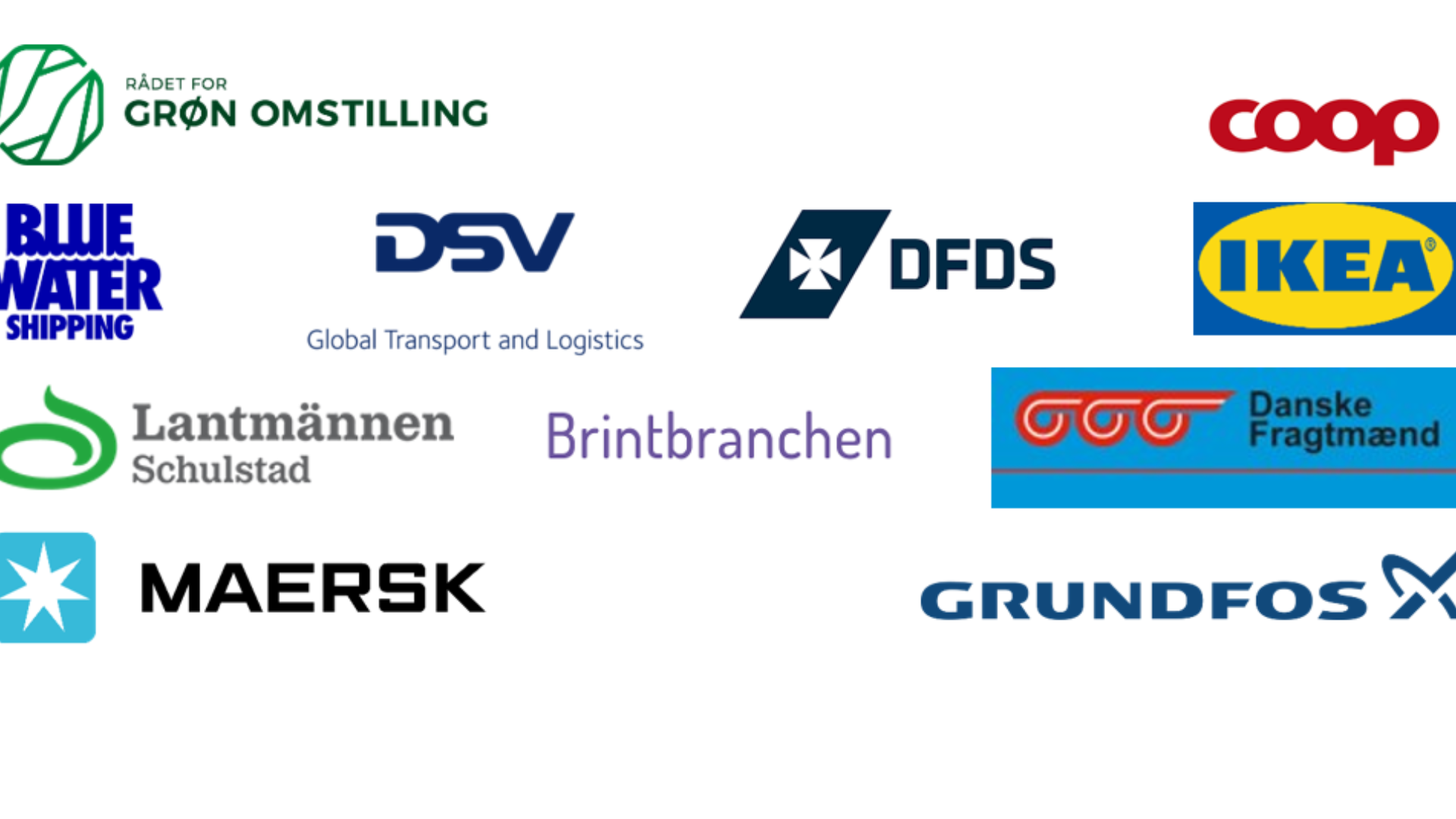
Green Transition Denmark has teamed up with Mærsk, DSV, IKEA, DFDS, Brintbranchen, Danske Fragtmænd, Grundfos, Lantmännen Schulstad, Coop and Blue Water Shipping to write a consultation response to the EU Commission's proposal for a regulation on strengthened CO2 emission targets for new heavy vehicles, more specifically regarding CO2 requirements for new trucks. In the proposal from the EU Commission, the CO2 reduction requirement for new trucks is 45 percent in 2030, 65 percent in 2035 and 90 percent in 2040.  

Together, the Green Transition Denmark and the companies recommend the following: 

  • that the CO2 reduction requirement for new trucks is increased to 65 percent in 2030 
  • that all new trucks sold must be zero emission by 2035 (with the exception of special vehicles) 

Our joint recommendations have been sent to the Ministry of Transport and the Ministry of Climate, Energy and Supply. 

In the Green Transition Denmark, we work to put pressure on the EU's Council of Ministers and the EU Parliament to make the legislation more ambitious. 

Read the response to the consultation below.


By |2023-11-23T12:40:14+01:0024. March 2023|Hearing response|0 Comments
Go to Top