New manifesto: Save resources in the EU
The climate and the planet cannot support a continuously increasing demand for energy, resources and materials. Therefore, resource savings must be focused on the economic and political agenda in the EU
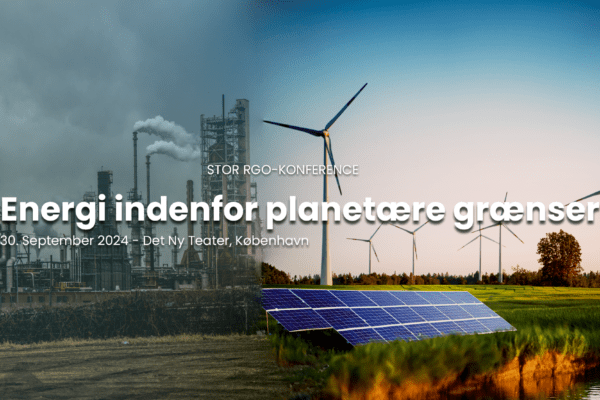
In the future, we must stay within the planetary limits, and this also requires that the EU in the next election period brings resource savings into the heart of the economic and political agenda. The climate and the planet cannot support a continuously increasing demand for energy, resources and materials. Therefore, the Green Transition Denmark together with 74 other European organizations have written a manifesto in which we call on the EU's decision-makers to make sufficiency - that is, sufficiency - a central strategic effort in the coming years. The manifesto is called: A resilient and resource-wise Europe. Sufficiency at the heart of the EU's future.
It is possible to make the entire EU climate neutral and phase out all fossil fuels by 2040, to make the continent self-sufficient with clean renewable energy and to significantly reduce energy and resource consumption in all sectors of the economy. In the manifesto, we recommend i.a. binding targets for reduction in energy and material consumption.
Resource wisdom is cheaper than wisdom
The good news is that it is also actually cheaper than a business-as-usual scenario. Households and companies can save a lot of money on current consumption. The economy's environmental, climate and health costs can be significantly reduced. And if sufficiency is thought from the start and the way we design, consume and produce is rethought, we will also be able to lower the ongoing costs for new investments.
There will of course be many who find it difficult to imagine something that deviates from business-as-usual and the old-fashioned mainstream economy, but in the Green Transition Denmark we see a huge potential for rethinking the way we organize the economy in Europe. New incentive structures are needed that value nature instead of treating it as cheap dirt that is not properly taken into account in the economic models.
Contact

Bjarke Møller

READ MORE